NON SI È MAI ESTRANEI A NIENTE
“Non si è mai estranei a niente di ciò che accade intorno, e quando si è soli ancor meno. Il corpo è un organo per affondare nell’esterno, come pietra, lichene, foglia.”
Giovanni Celati, “Verso la foce”
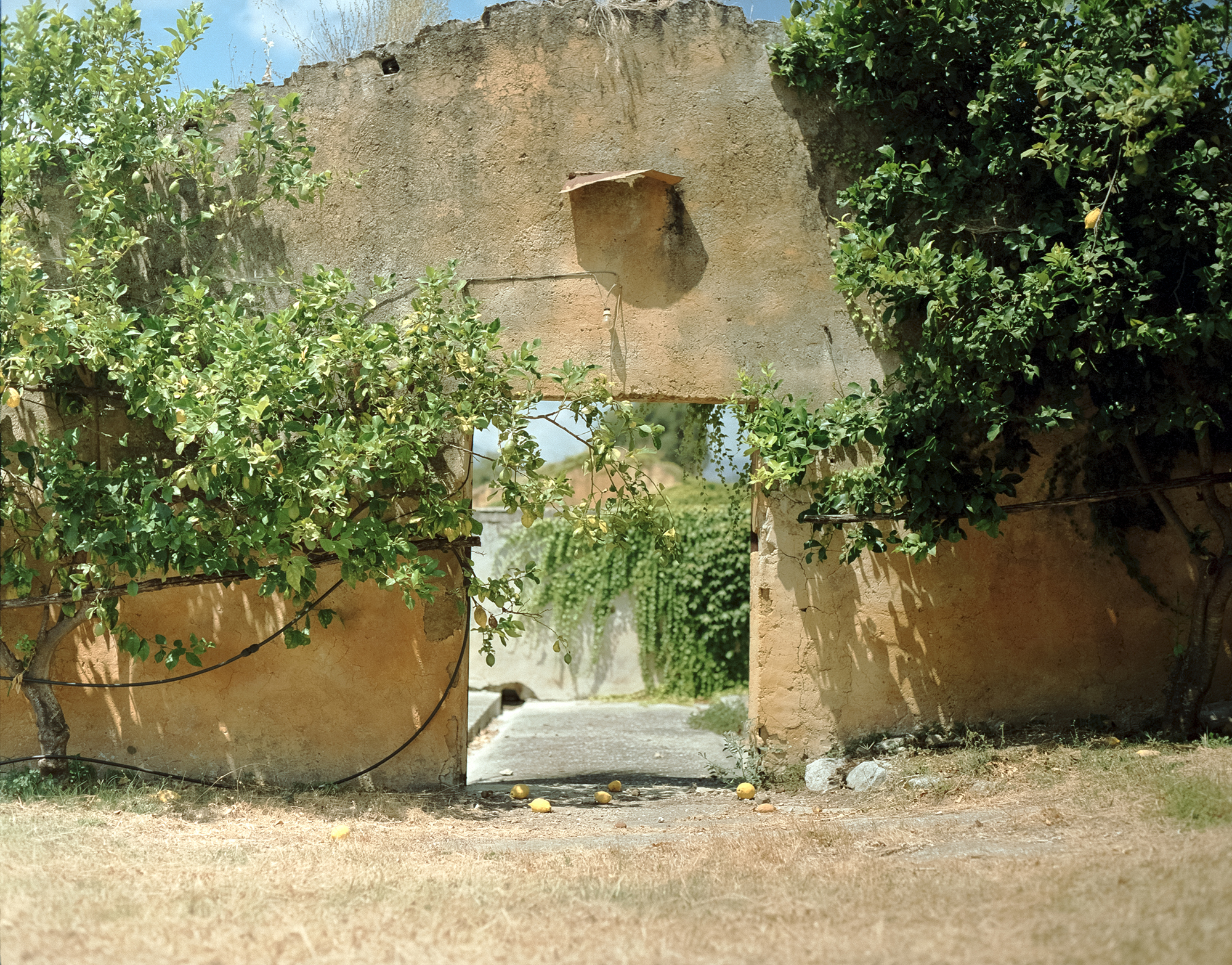
Prima di iniziare questo cammino che non è ancora terminato, il Volturno era solo il fiume che dovevo attraversare tutte le mattine per andare al lavoro. Gli unici sguardi distratti che gli rivolgevo servivano a misurarne il livello perché le piene, seppur non frequenti, sono una vera rottura di scatole. Per tutti questi anni ho prestato lo stesso livello di attenzione per le terre che attraversa ‒ Terra di lavoro, Terra dei fuochi ‒ con un sentimento talvolta di rabbia ma più spesso scoraggiato, rassegnato. Fino a quando, durante la pandemia, per forza e per sopravvivenza, ho iniziato a esplorare quello che c’era a pochi chilometri da casa e ho presto realizzato che non avevo capito proprio niente: così ho preso la macchina fotografica e una decisione. Ho scelto il Volturno come guida per queste terre, come se fosse un corrimano in una stanza buia a cui mi tengo aggrappata perché so che seguendo il suo fluire attraverserò ogni genere di luogo e che alla fine del viaggio, anche se non avrò tutte le risposte che cerco, sarò più consapevole.
Viaggiando lungo una riva e poi lungo l’altra e poi verso la sorgente e poi verso la foce, senza un ordine apparente, assecondando i suoi e i miei umori capricciosi, ho compreso che per me il fiume non è altro che un lungo corridoio d’acqua che collega molte stanze di una stessa casa. Ho imparato che per chi abita lungo il fiume esiste solo il tratto di fiume che si può vedere. Il fatto che questo scorra dall’alto, che provenga da luoghi situati più a monte, si svela solo quando c’è una piena che produce un mutamento nel paesaggio che altrimenti somiglierebbe sempre a sé stesso.
Per chi vive accanto al fiume, il fiume non è un fiume, il fiume in quanto tale non esiste.
Questa forse non è una risposta, ma di certo un buon in(d)izio.
Il progetto è in corso.
NEVER TRULY A STRANGER
“We are never truly strangers to what happens around us — and even less when we are alone. The body is an organ for sinking into the outside, like stone, lichen, leaf.”
Giovanni Celati, “Towards the mouth”
Before embarking on this journey, which is not yet over, the Volturno was just the river I had to cross every morning on my way to work. The only distracted glances I cast its way were to gauge its level, because floods—though infrequent—are a real pain in the neck. For all these years, I paid the same level of attention to the lands it flows through: the so-called Land of Work (Terra del Lavoro) due to its fertile soil, also sadly known as the Land of Fires due to the frequent fires of illegal landfills. Here the local mafia, Camorra, has too often shaped the landscape and imposed its rules like a state within a state. That is why I used to look at this places with a feeling sometimes of anger but more often of discouragement, resignation. Until, during the pandemic, out of necessity and for survival, I began to explore what lay just a few kilometers from home and soon realized I hadn’t understood a thing: so I grabbed my camera and made a decision. I chose the Volturno as my guide through these lands, as if it were a handrail in a dark room that I cling to because I know that by following its flow I will pass through all kinds of places and that at the end of the journey, even if I don’t have all the answers I’m looking for, I will be more aware.
Traveling along one bank and then the other, then toward the source and then toward the mouth, in no particular order, following its and my own capricious whims, I realized that, for me, the river is nothing more than a long corridor of water connecting the many rooms of a single house. I have learned that for those who live along the river, only the stretch of river that can be seen exists. The fact that it flows from above, that it comes from places further upstream, is revealed only when there is a flood that brings about a change in the landscape, which otherwise would always look the same.
For those who live beside the river, the river is not a river; the river as such does not exist.
This may not be an answer, but it is certainly a good clue.
The project is ongoing.